
Is there going to be a third Temple built before Christ returns?
Be Prepared
by Jeff Reed
Jesus gave an engaging parable concerning the nature of the Kingdom of God in the life of His followers. Jesus tells a story about five foolish and five wise virgins.

“For when the foolish took their lamps, they took no oil with them, but the wise took flasks of oil with their lamps. As the bridegroom was delayed, they all became drowsy and slept. But at midnight there was a cry, ‘Here is the bridegroom! Come out to meet him.’ Then all those virgins rose and trimmed their lamps. And the foolish said to the wise, ‘Give us some of your oil, for our lamps are going out.’ But the wise answered, saying, ‘Since there will not be enough for us and for you, go rather to the dealers and buy for yourselves.’ And while they were going to buy, the bridegroom came, and those who were ready went in with him to the marriage feast, and the door was shut. Afterward the other virgins came also, saying, ‘Lord, lord, open to us.’ But he answered, ‘Truly, I say to you, I do not know you’” (Matthew 25:3-12, ESV).
Continue readingThe Time of Jacobs Trouble
This is a phrase that we hear often in Christianity, but what does the phrase mean and to whom does it apply?
The Calling of God
By: Lanora – Woman to Woman Blog
Do you remember when you were called into God’s Truth and His way of life? Remember how excited you felt and how you wanted to share it with everyone. It is still just as vivid in my mind today as it was thirty-seven years ago. That was when I responded to God’s calling. When I look back on my life I could actually see that God was working with me long before I even recognized it.

Overcoming Sin
by Mike James
As we end our first Holy Day season of the year (Passover and Unleavened Bread), we need to be reminded of the fact that we must work at eradicating sin from our lives. Yes, we are saved by grace through faith, but we are also expected to do good works (Ephesians 2:8-10). Good works, of course, are the opposite of bad works, or sin.

We will begin by defining the Greek and Hebrew words for sin. In Hebrew, the word for sin is hata or chattah. It can mean erring, doing wrong, missing the mark, or going astray. The primary Greek word for sin is harmatia. Much like the Hebrew word, it means to miss the mark. There are other terms in the Hebrew and Greek pertaining to sin, but these are the primary words associated with it.
Continue readingThe Israel of God Part II
Is there such a thing as “The Israel of God”? If there is, whom does it describe? This is part two of a two-part series starting in Genesis with Abram. Given on the Sabbath after the last day of Unleavened Bread in 2026.
The Israel of God
Is there such a thing as “The Israel of God”? If there is, whom does it describe? This is part one of a two-part series starting in Genesis with Abram. Given on the last day of Unleavened Bread in 2026.
America’s Origins, Christian or Not?
by Mike James
With the rise of Christian nationalism in the United States today, there is an ongoing debate in various forms of media as to whether the United States originated as a Christian nation. Many of the early settlers who came to America came from states (nations) that were known as confessional states. This means that the monarch of those nations decided the religion of their people. The early leaders of our country were aware of the problems this caused in Europe with many conflicts that arose over religious differences.
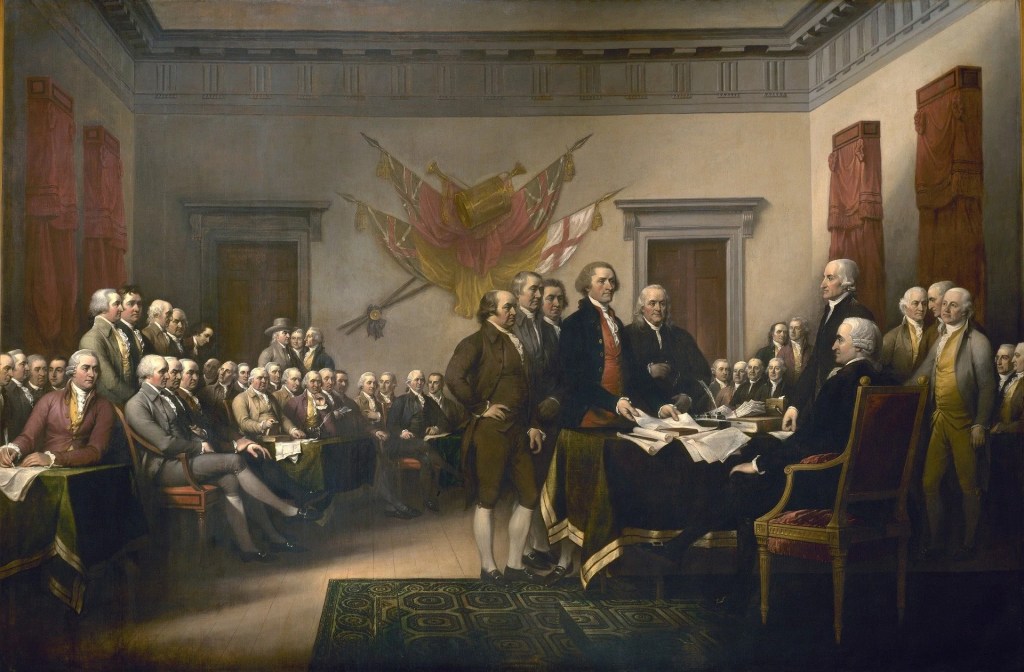
With this in mind, our founding fathers made sure our founding documents provided a separation of church and state. But it is important to note that prior to the Revolutionary War, most of the Thirteen Colonies were confessional states, although of different Christian denominations. Connecticut remained one until 1818. Those that were not made it clear in their constitutions that they believed in the biblical God. Other American states required each town or individual to support some Christian religious body without the state deciding which one. This was also abolished. The last state was Massachusetts, which restricted the obligation in 1821 and ended it in 1843.
Continue reading The Church of God International Springfield, Missouri