Overcoming Sin

by Mike James

As we end our first Holy Day season of the year (Passover and Unleavened Bread), we need to be reminded of the fact that we must work at eradicating sin from our lives. Yes, we are saved by grace through faith, but we are also expected to do good works (Ephesians 2:8-10). Good works, of course, are the opposite of bad works, or sin.

We will begin by defining the Greek and Hebrew words for sin. In Hebrew, the word for sin is hata or chattah. It can mean erring, doing wrong, missing the mark, or going astray. The primary Greek word for sin is harmatia. Much like the Hebrew word, it means to miss the mark. There are other terms in the Hebrew and Greek pertaining to sin, but these are the primary words associated with it.

Continue reading

America’s Origins, Christian or Not?

by Mike James

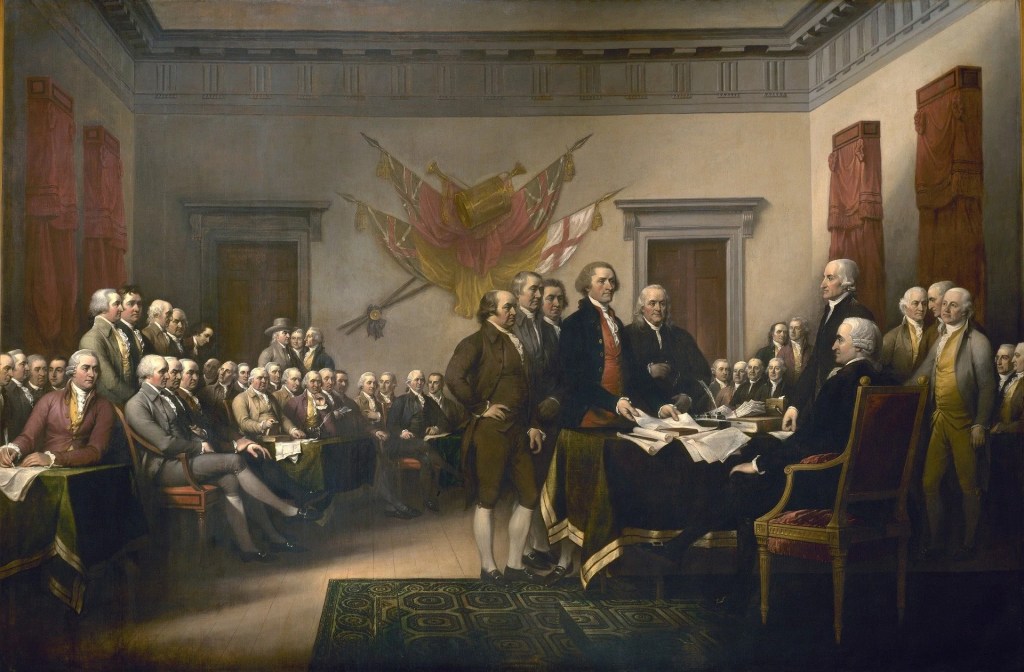
With the rise of Christian nationalism in the United States today, there is an ongoing debate in various forms of media as to whether the United States originated as a Christian nation. Many of the early settlers who came to America came from states (nations) that were known as confessional states. This means that the monarch of those nations decided the religion of their people. The early leaders of our country were aware of the problems this caused in Europe with many conflicts that arose over religious differences.

With this in mind, our founding fathers made sure our founding documents provided a separation of church and state. But it is important to note that prior to the Revolutionary War, most of the Thirteen Colonies were confessional states, although of different Christian denominations. Connecticut remained one until 1818. Those that were not made it clear in their constitutions that they believed in the biblical God. Other American states required each town or individual to support some Christian religious body without the state deciding which one. This was also abolished. The last state was Massachusetts, which restricted the obligation in 1821 and ended it in 1843.

Continue reading

How to Change

by Mike James

One of the big themes for the Church of God at this time of year is change. God’s holy-day season begins in the spring of the year as winter has ended and spring has sprung. This major seasonal transition is connected to the beginning of God’s yearly holy days. One of the things the Days of Unleavened Bread bring to mind is the need for change in our lives. Christ’s sacrifice for us reminds us of the need to become more like Christ. We can do this by removing sin from our lives.

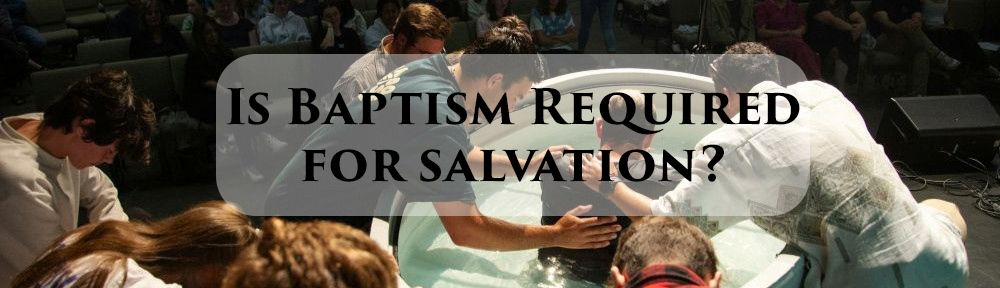
The problem is, for carnal flesh-and-blood humans, that is easier said than done. Our biggest helper in making needed change in our lives is having God’s Spirit to help us. As we learn God’s truth, the formula is to repent, be baptized, and receive God’s Spirit (Acts 2:38). This certainly is the most important point in helping us make needed changes in our lives. But are there other tools we can implement along with this?

Continue reading

Does God Love the Whole World?

By: Mike James

One of the most popular scriptures supporting the idea that God cares about Gentiles as much as He cares about Israel is John 3:16. This scripture basically says that God so loved the world that He gave His only begotten Son that whoever believes in Him will have eternal life. When you put this together with all the scriptures we find in the New Testament, it seems very clear that God is not playing favorites.

But believe it or not, there are some people who believe in the Bible, and they take a different view about John 3:16. Groups like the Black Hebrew Israelites (BHI) and Calvinists. Both groups believe this verse is not saying God loves and wants to save everyone in the world. These groups suggest that this verse means God just wants to save the Israelites or the elect. Let’s take a closer look at why they say this and prove that what they think is incorrect.

Continue reading

Girl Crisis

by Mike James

According to recent federal research, nearly one in three high school girls said they had considered suicide. This is a 60 percent increase from stats only ten years ago. This same research found 15 percent of these girls had been raped. Another six out of ten girls were so sad or hopeless that it caused them to stop regular activities.

This data comes from the Youth Risk Behavior Survey by the Centers for Disease Control and Prevention. They surveyed a nationally representative sample of public and private high school students.

A lot of this data was collected in the fall of 2021, so the Covid situation at the time may have played into some of this data.

The CDC opined that “America’s teen girls are engulfed in a growing wave of sadness, violence and trauma.” But why is there an increase in all of this for girls?

According to Harvard psychologist Richard Weissbourd, “girls are more likely to respond to pain in the world by internalizing conflict and stress and fear, and boys are more likely to translate those feelings into anger and aggression.”

Continue reading

A Real Christian

Many Christians today believe you are a Christian if you believe that Jesus lived and died for us and rose from the dead. Scriptures cited for this idea are Romans 10:9, 1 Corinthians 2:2, and John 3:16. Now let me be clear, I agree with these scriptures, but what does it mean to believe in someone or something?

Well, think about it from this perspective: if you genuinely love someone, do you act on your love? Do you do things for the other person to help them in your relationship? I’m sure you do, as I’m about to run to the grocery store to pick up something my wife has asked me to buy. I drove my daughter to school this morning and will pick her up this afternoon for the same reason. Love is not just a feeling or emotion; it is an action for the other.

Continue reading

Lying Spirit From God?

by Mike James

There is an interesting scripture in 1 Kings 22:19-23 that says the following: “And he said, Hear thou therefore the word of the Lord: I saw the Lord sitting on his throne, and all the host of heaven standing by him on his right hand and on his left. And the Lord said, Who shall persuade Ahab, that he may go up and fall at Ramoth Gilead? And one said on this manner, and another said on that manner. And there came forth a spirit, and stood before the Lord, and said, I will persuade him. And the Lord said unto him, Wherewith? And he said, I will go forth, and I will be a lying spirit in the mouth of all his prophets. And he said, Thou shalt persuade him, and prevail also: go forth, and do so. Now therefore, behold, the Lord hath put a lying spirit in the mouth of all these thy prophets, and the Lord hath spoken evil concerning thee.”

Some have an issue with this because it seems like God is sending a lying spirit to influence certain prophets to lead King Ahab to his death in battle.

The question would be, could God allow an angel or spirit under His control to force prophets to lie to the king? This does not make sense because lying is a sin, and God cannot sin!

Continue reading

Life, Death, and Fruit Flies

by Mike James

I read an interesting fruit fly study that got me thinking about how stress may impact humans. The study was conducted by Christi Gendron, a neurobiologist at the University of Michigan.

Gendron conducted a study on how living fruit flies respond to the sight of dead fruit flies. The research was published in the journal PLOS Biology. Apparently, neurons in the flies’ brains make them age faster after seeing dead flies. Scientists believe this relates to perceptions within the brains of animals causing physical reactions in their bodies.

Dr. Gendron and Scott Pletcher, who is a biologist at the University of Michigan, discovered how flies deal with death unintentionally. They were trying to see whether flies would show a behavioral or physiological response, like a heightened immune system, after being around other flies that had been made sick with a disease. “The only types of responses we saw happened after the flies that we infected died,” Dr. Pletcher said.

Continue reading